
Simulation-Driven Engineering, Enhanced with AI and Data Engineering
Finite element analysis: know where it fails, and fix it on screen
Our Finite Element Analysis (FEA) service delivers high-fidelity simulation across every major engineering physics domain (mechanical, thermal, chemical, electrical, magnetic, structural, and fluid dynamics) plus full multiphysics coupling.
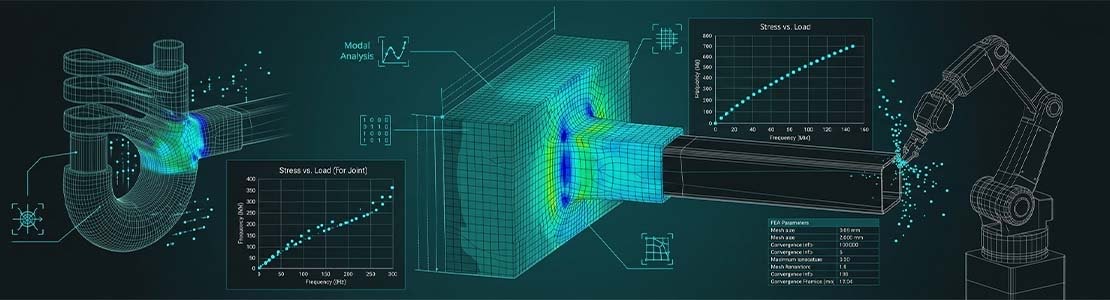
A cantilever is meshed, loaded at the tip and solved. Colour shows bending stress.
Questions it answers
What engineering teams ask us
Our multidisciplinary team (structural, thermal, chemical, electrical, and fluid dynamics engineers) goes far beyond conventional solid-mechanics FEA. We routinely solve coupled, transient, and nonlinear problems that most simulation providers treat as “out of scope.” The result: earlier design decisions, fewer costly prototypes, and products that perform reliably under realistic operating conditions.
Will this structure withstand mechanical loads, pressure, or fatigue?
Yes, our FEA accurately predicts stress, deformation, and fatigue life under real mechanical loads and pressure conditions.
How will temperature gradients or thermal expansion affect performance?
We simulate temperature effects and thermal expansion to ensure reliable performance and prevent material failure.
How will chemical reactions, species transport, or electrochemical processes influence the system?
Our multiphysics FEA models chemical reactions and electrochemical effects to accurately predict system behavior.
Will electrical currents or magnetic fields generate unwanted forces, heating, or interference?
We evaluate electromagnetic forces, Joule heating, and interference to eliminate unwanted electrical and magnetic issues.
How do fluids interact with solid structures (FSI)?
Full fluid-structure interaction simulations reveal dynamic coupling between fluids and solids under operating conditions.
Can the design be optimized without increasing weight, cost, or failure risk?
Our FEA-driven optimization reduces weight and cost while improving reliability and eliminating failure risks.
How can we turn simulation results into faster, data-driven design decisions?
Our AI and data engineering support turns FEA results into surrogate models, automated workflows, and well-organized simulation data, so each new design iteration is faster than the last.
Technical capabilities
What we cover
Structural & Mechanical Analysis
Static/dynamic loads, stress/strain, deformation, buckling, contact, fatigue life, and lifecycle prediction.
Thermal Analysis
Steady-state and transient heat transfer, thermal expansion, electronic cooling, energy systems, and heat-driven mechanical behavior.
Fluid Dynamics & Fluid-Structure Interaction (FSI)
Flow-induced loads, pressure distribution, and full two-way coupling between fluids and solids.
Nonlinear Simulations
Material nonlinearity, geometric nonlinearity, plastic deformation, hyperelasticity, contact, and hardening.
Chemical Analysis
Reaction kinetics, species transport, electrochemical processes, mass transfer, and coupled chemo-mechanical or chemo-thermal effects.
Electrical Analysis
Current flow, Joule heating, electrical conductivity, and coupled electro-thermal effects.
Magnetic Analysis
Electromagnetic fields, magnetic forces, induction, wireless power transfer coils, and magneto-structural coupling.
Multiphysics Simulation
Any combination of the above (e.g., thermo-mechanical-chemical-electrical-magnetic-fluid) in a single integrated model.
Workflow
How a FEA project runs
Clarify objectives, operating conditions, and performance targets.
CAD import, high-quality meshing, material properties, boundary conditions.
Solve across all relevant physics domains.
Iterate geometry, materials, or loading for performance gains, using AI-assisted optimization where it speeds up iteration.
Detailed contour plots, animations, quantitative results, and clear engineering recommendations, with automated reporting for repeat studies.
Delivered work
Some FEA projects we have delivered
- Coupled transient plastic heat staking
- Design & optimization of pressure vessels
- Hyperelastic deformation of TPU
- Lateral torsional buckling of beams
- ANSYS MAPDL thermal analysis
- Ultrasonic welding simulation
- CO₂ electrolyzer simulation studies (electrochemical + fluid + structural)
- Microneedling drug delivery systems
- Septal cartilage dynamics
- Plasma systems (electromagnetic + fluid + thermal)
- Pipe stress analysis
- Heat transfer in porous electrodes
- High-power application coils for wireless power transfer in electric vehicles (electromagnetic + thermal)
Tools & technologies
ANSYS, COMSOL Multiphysics, Simcenter CCM+, OpenFOAM, SolidWorks, MATLAB, and Python-based scientific computing, chosen for their ability to handle true multiphysics coupling at industrial and research-grade accuracy. Python also underpins the automation, machine learning, and data workflows we build around FEA projects.
Case studies
Related projects
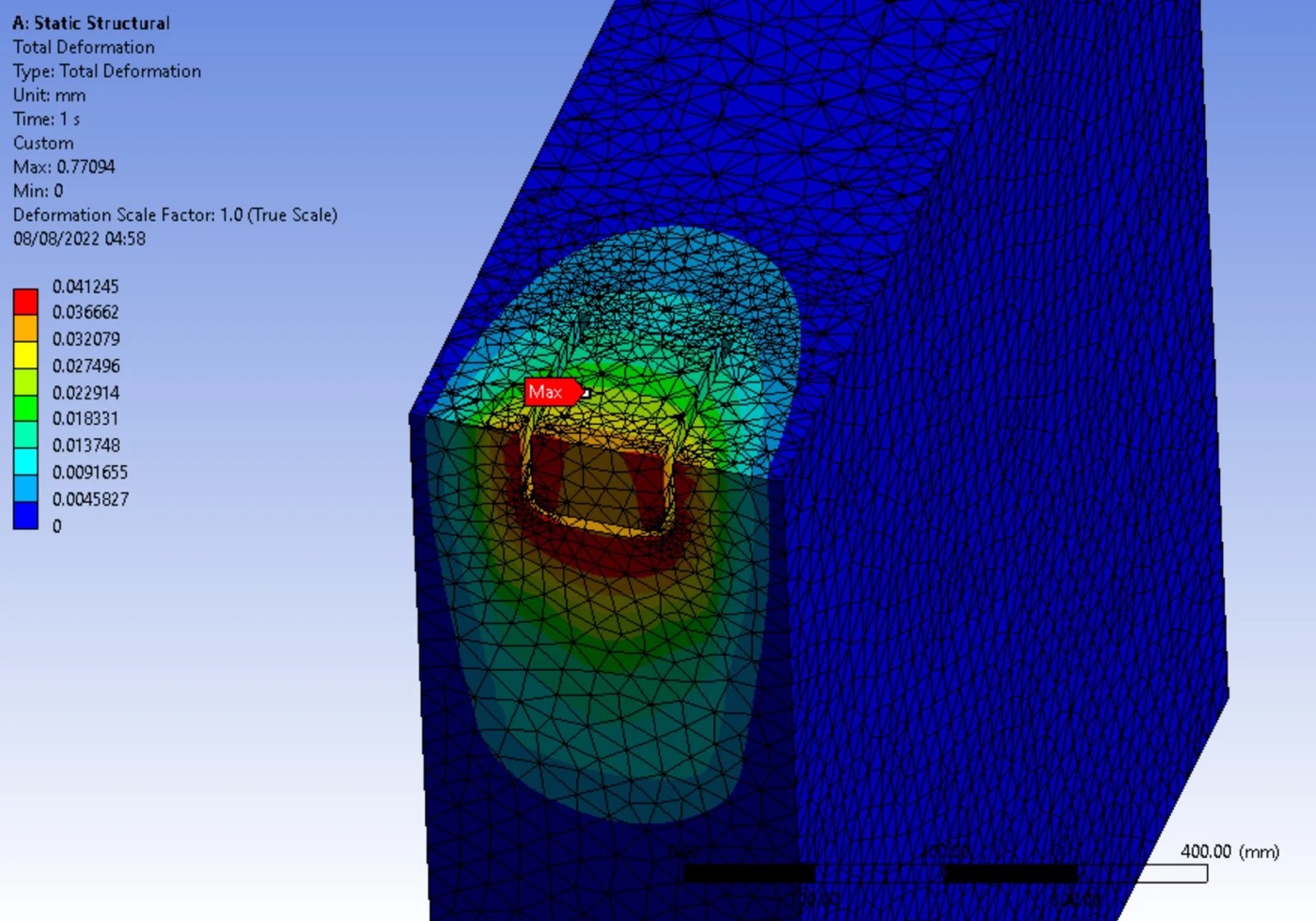
Structural Integrity Analysis of Concrete - Steel Strut Joint
Validate structural stability of a concrete-steel strut joint without bolt reinforcement
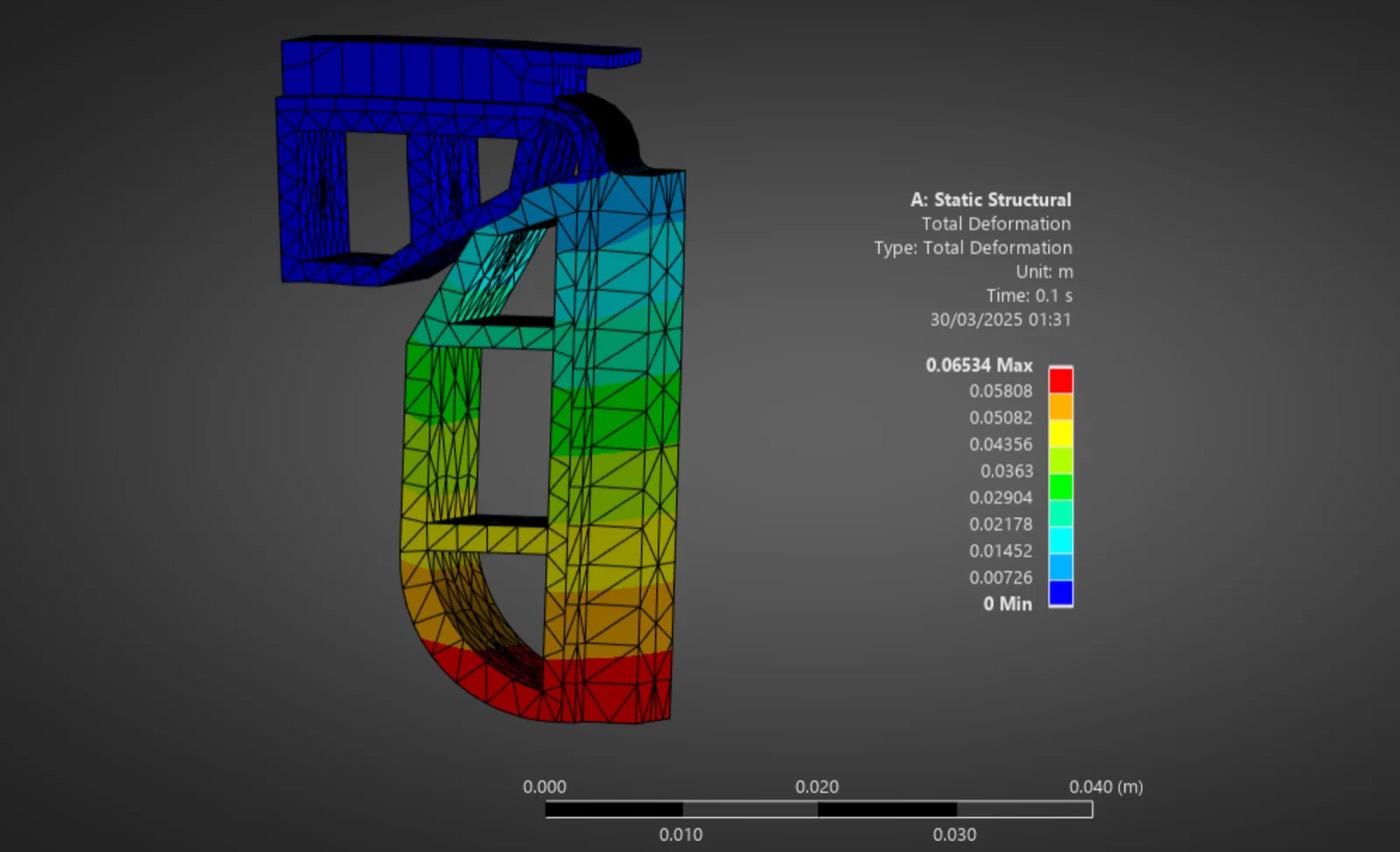
Hyperelastic Material Analysis of Thermoplastic Polyurethane
Evaluate deformation and stress behavior of Thermoplastic Polyurethane (TPU) under applied load
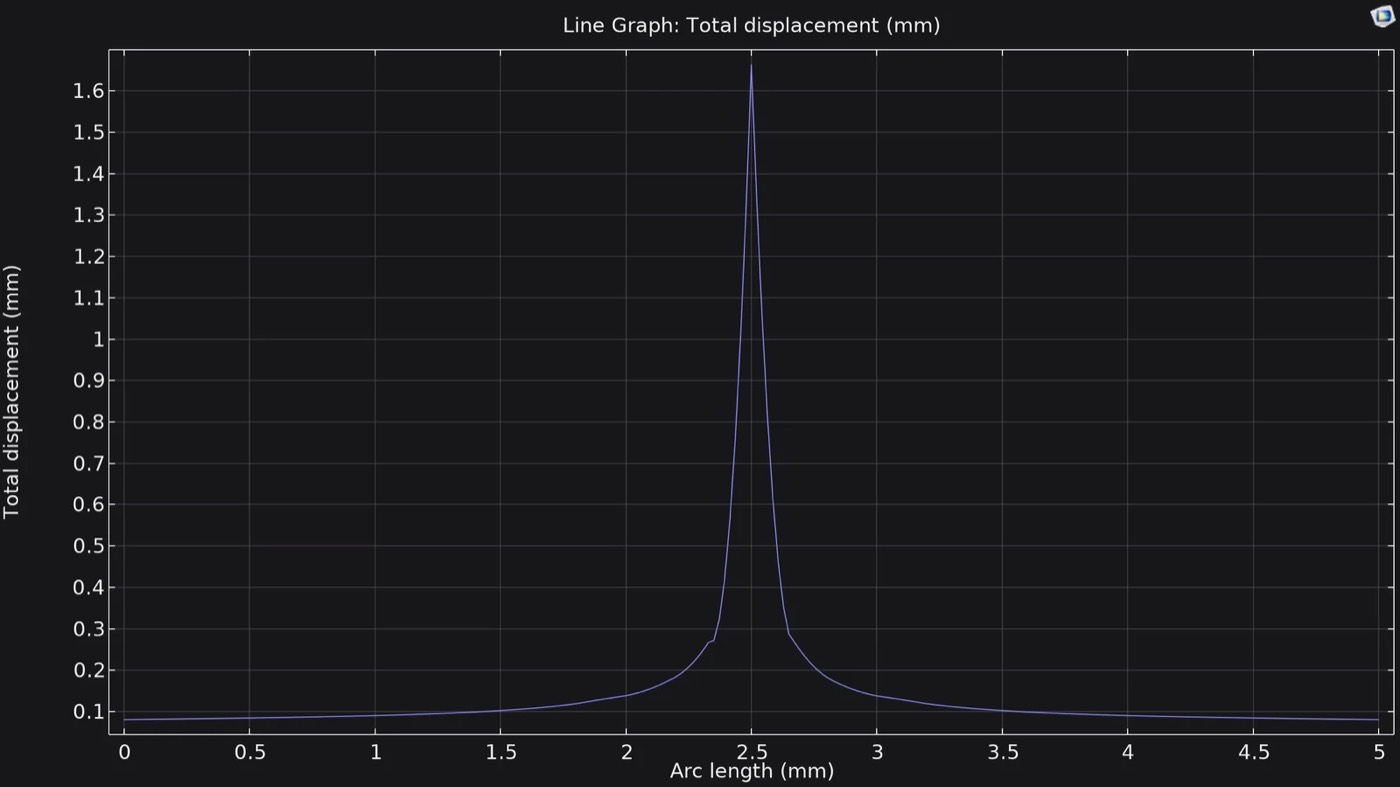
Multiphysics Simulation of Coal Powder Press Machine
Evaluate mechanical compression and airflow interaction within a coal powder press system
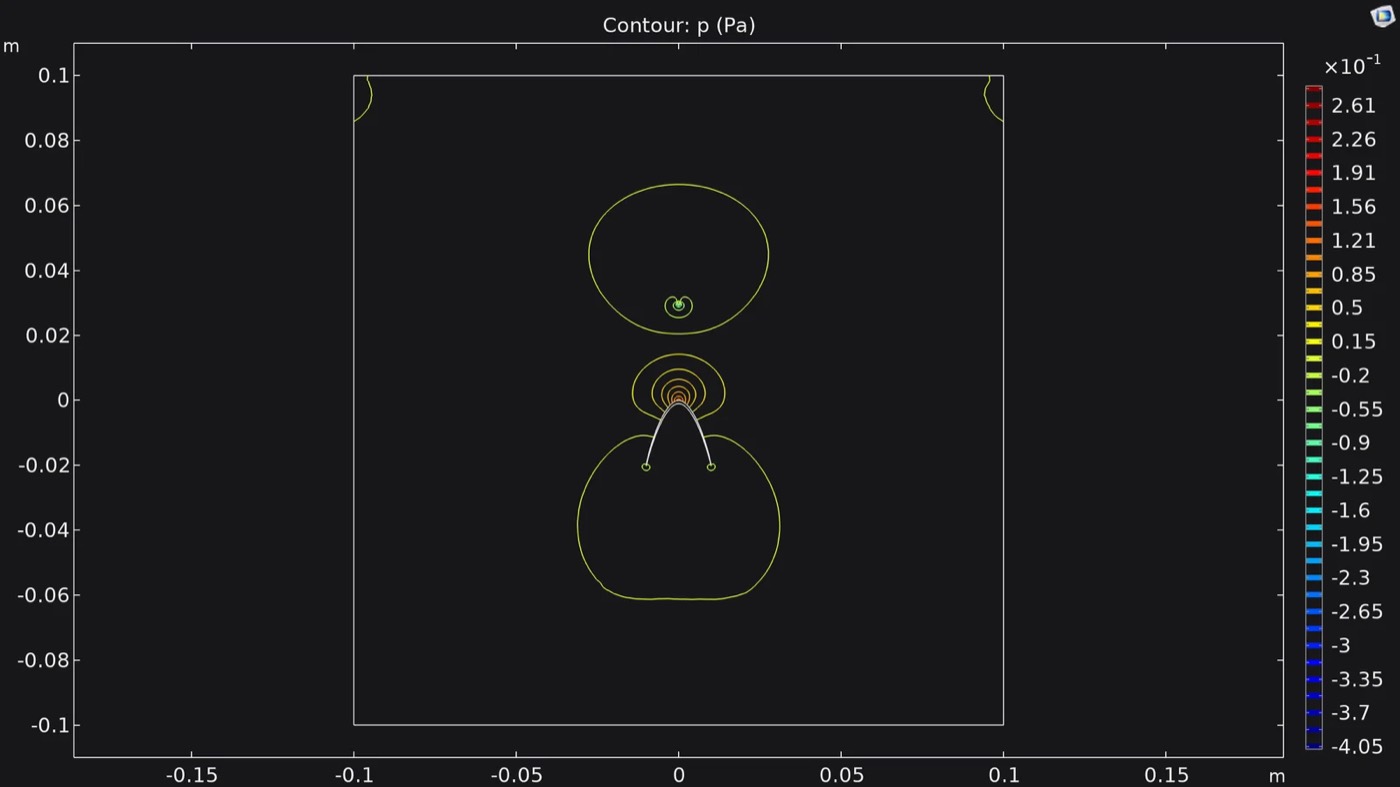
Capacitor with Electrohydrodynamic Flow through Corona Discharge
Analyze the effect of ground electrode width on propulsion generated by an asymmetric capacitor
Start a project
Discuss your FEA project
Tell us what you are designing and what you need to know, and book a complimentary consultation with our engineering team.
- What the part or system does and the question you need answered.
- Files you have: CAD, drawings, test data, papers.
- Your software if results must open in it (COMSOL, ANSYS, SolidWorks…).
- Deadline.