
Analytical & Optimization-Driven Engineerin
Mathematical modelling: the equations behind the simulation
Our Mathematical Modeling and Analysis service delivers rigorous analytical and numerical solutions across every major engineering physics domain, mechanical, thermal, chemical, electrical, magnetic, structural, and fluid dynamics, plus full Multiphysics coupling.
A damped oscillator, solved live. Drag the damping ratio and watch the response change.

Questions it answers
What engineering teams ask us
Our multidisciplinary team (structural, thermal, chemical, electrical, and fluid dynamics engineers) goes far beyond basic equations. We routinely solve differential equations, perform sensitivity analysis, uncertainty quantification, and multi-objective optimization, challenges most modeling providers treat as “out of scope.” The result: analytically validated designs, faster convergence in simulations, lower prototyping costs, and products that perform reliably under real-world conditions.
Do we have closed-form or reduced-order models to quickly validate design concepts?
We derive closed-form and reduced-order models for fast, accurate concept validation.
How can we optimize parameters for performance while meeting thermal, chemical, or electrical constraints?
Our optimization balances performance with thermal, chemical, and electrical constraints.
What are the governing equations and their analytical solutions for our Multiphysics system?
We formulate and solve governing equations with exact analytical solutions for multiphysics systems.
How sensitive is the design to variations in material properties or operating conditions?
Sensitivity and uncertainty analysis quantify the impact of material and operating variations.
Can we predict system behavior analytically before committing to detailed FEA or CAD?
Yes, analytical models predict behavior rapidly before full FEA or CAD commitment.
Will the mathematical model support both rapid prototyping and scalable mass manufacturing decisions?
Models directly support rapid prototyping and scalable manufacturing decisions.
Technical capabilities
What we cover
Structural & Mechanical Modeling
Analytical stress/strain solutions, buckling and vibration eigenvalues, fatigue life prediction, and nonlinear constitutive models.
Thermal Analysis Modeling
Closed-form heat conduction/convection solutions, thermal expansion, lumped-parameter models, and transient response analysis
Chemical Analysis Modeling
Reaction kinetics, species transport equations, electrochemical models, and mass-transfer analytical solutions.
Nonlinear & Multiphysics Modeling
Material nonlinearity, geometric nonlinearity, plastic deformation, hyperelasticity, and full coupled Multiphysics equation sets (e.g., thermo-mechanical-chemical-electrical-magnetic-fluid)
Electrical Analysis Modeling
Circuit equivalents, Joule heating equations, conductivity models, and coupled electro-thermal analytical expressions.
Magnetic Analysis Modeling
Electromagnetic field equations, magnetic force derivations, induction models, and magneto-structural coupling solutions.
Fluid Dynamics Modeling
Analytical flow solutions (Navier-Stokes simplifications), pressure distribution, and fluid-structure interaction reduced-order models.
Optimization & Uncertainty Analysis
Multi-objective optimization, sensitivity studies, Monte-Carlo analysis, and design-space exploration.
Workflow
How a Math modelling project runs
Clarify objectives, governing physics, and performance targets.
Formulate differential/algebraic equations, material properties, and boundary conditions.
Derive closed-form solutions where possible and apply robust numerical methods.
Iterate parameters for performance, cost, and manufacturability gains.
Compare with FEA/CAD data, deliver analytical insights, plots, equations, and manufacturing recommendations.
Delivered work
Some Math modelling projects we have delivered
- Coupled transient plastic heat staking (analytical thermo-mechanical models)
- Design & optimization of pressure vessels (closed-form stress and buckling solutions)
- Hyperelastic deformation of TPU (analytical constitutive modeling)
- Lateral torsional buckling of beams (exact eigenvalue solutions)
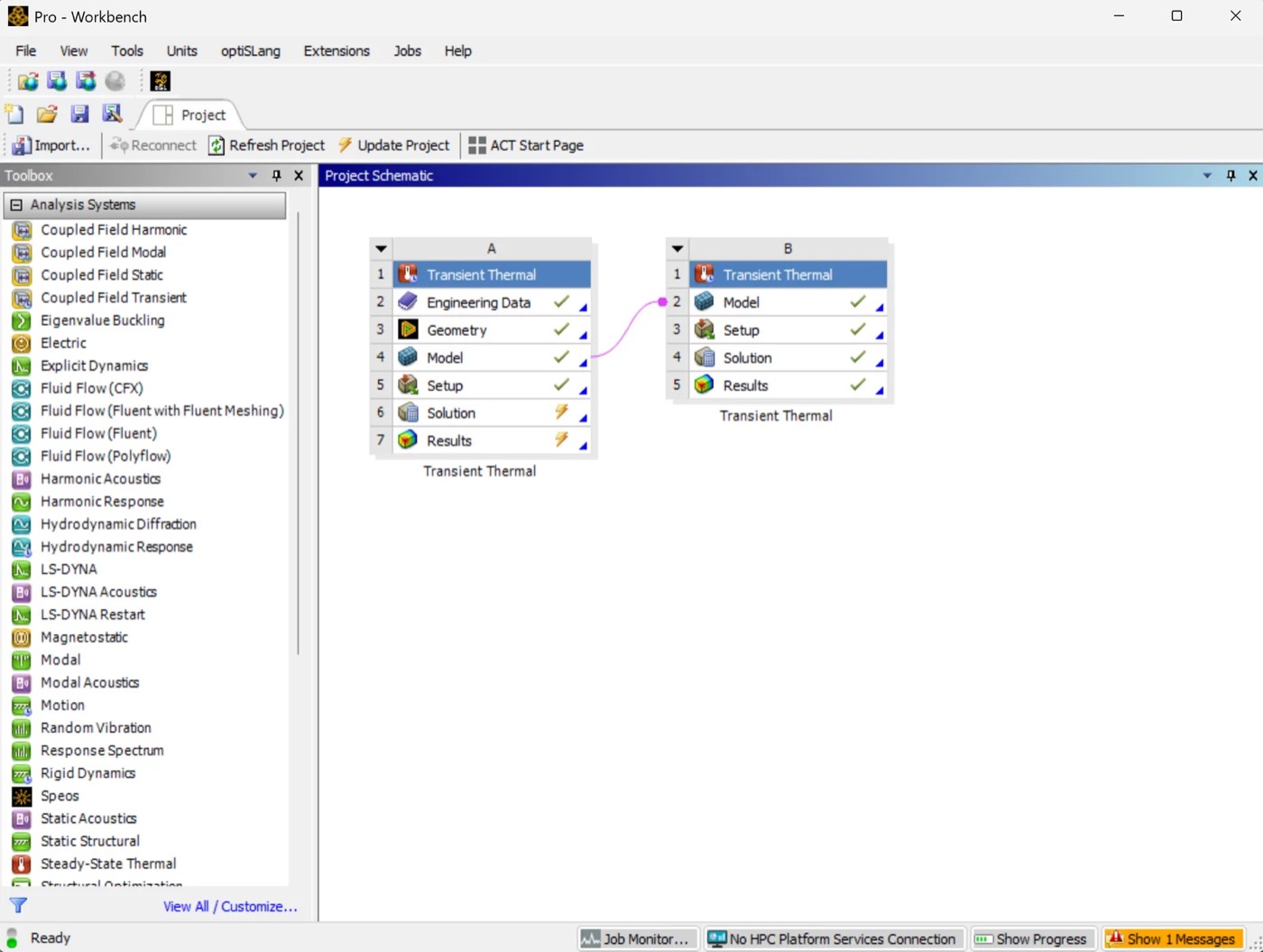
- ANSYS MAPDL thermal analysis validation with analytical heat-transfer models
- Plasma systems (analytical electromagnetic + fluid + thermal models)
- CO₂ electrolyzer simulation studies (analytical electrochemical + fluid + structural models)
- Ultrasonic welding simulation (analytical energy and temperature profiles)
- Heat transfer in porous electrodes (analytical species transport models)
- High-power application coils for wireless power transfer in electric vehicles (analytical electromagnetic + thermal coupling)
- Microneedling drug delivery systems (analytical fluid and diffusion models)
- Septal cartilage dynamics (analytical viscoelastic and structural models)
- Pipe stress analysis (analytical beam and pressure solutions)
Tools & technologies
MATLAB, Python (SymPy, SciPy, NumPy, PuLP), Mathematica, COMSOL Multiphysics (for hybrid validation), ANSYS, and custom scientific computing scripts, chosen for their ability to deliver exact analytical solutions and seamless integration with CAD, FEA, and manufacturing systems at industrial and research-grade accuracy.
Start a project
Discuss your Math modelling project
Tell us what you are designing and what you need to know, and book a complimentary consultation with our engineering team.
- What the part or system does and the question you need answered.
- Files you have: CAD, drawings, test data, papers.
- Your software if results must open in it (COMSOL, ANSYS, SolidWorks…).
- Deadline.